Episode Transcript
[00:00:26] Speaker A: Sa.
[00:00:53] Speaker B: This is you versus you, episode six. Calling it an average day. My name is Dave woods, your host, and I'm here with the lovely Alicia Morales. And we're here. Let's get in. Let's get in after this. This is. I always wanted to treat the beginning of an episode as it's the first time that someone's heard this and you know, it's episode six. So if they haven't heard one, the pilot episode, let alone episode four, let alone this one, they can still feel like, oh, I get the. The gist of it. I'm feeling motivated. I'm able to ask myself some really important questions. I can find my reason, the why, to chase after my goal, to live it and then reach it just by coming in a random episode. Right. For instance, episode six, how would I do it? So my whole M.O. is saying I lost 100 pounds. A lot of people have asked me how I did it. This is the very detailed conversation style podcast on how I did it and how you can apply those strategies to your life and to what you're going after.
[00:02:11] Speaker A: Well, then let's jump in to.
For you to tell us what is the philosophy of the title of the show, you versus you.
[00:02:22] Speaker B: Yes, this. I feel completely inspired for having received that because just the more that I think about the pattern and that the new habits that I formed, I feel like this is something that touched my mind from God to say, oh, call it this U versus you instead of. I had some other names going. But the, the relevance of it is it comes down to not me versus Alicia Morales, it's not me verse Michael B. Jordan. It's not me versus Schwarzenegger in his prime, not me versus Muhammad Ali in his prime. It's Dave woods versus Dave Woods. And one of those versions is the old me, the 335 pound version of me. While the new me is the one who's pushing against the grain, who's swimming upstream, who's constantly trying to just evolve and go higher, bring it to the next level. And it's not about the other person who is in shape at the gym.
Rando stranger at the gym who's already in shape.
Two all the way to the person who's going to the gym for the first time and they look like a deer caught in headlights not knowing what to do at the gym. It's not about that. It's about me versus the default version of me at the gym, only concerned about that version of the gym. So that's actually one of the things that Gets me out of bed when my alarm clock goes up at 4:30 in the morning to. To start it. So this is that. That's the, the driving force, that constant reminder, especially when you click, especially when you click on an episode, you versus you, it's actually the person listening versus that same person listening, but their default mode, right? So yeah, moving from. Moving from glory to glory, as we were talking about earlier today, it's. You have the potential of what you could be and then there's the, the status quo of what you are. And that's it. You versus you.
[00:04:37] Speaker A: Right? You can't stay where you are. You have to move forward.
Right.
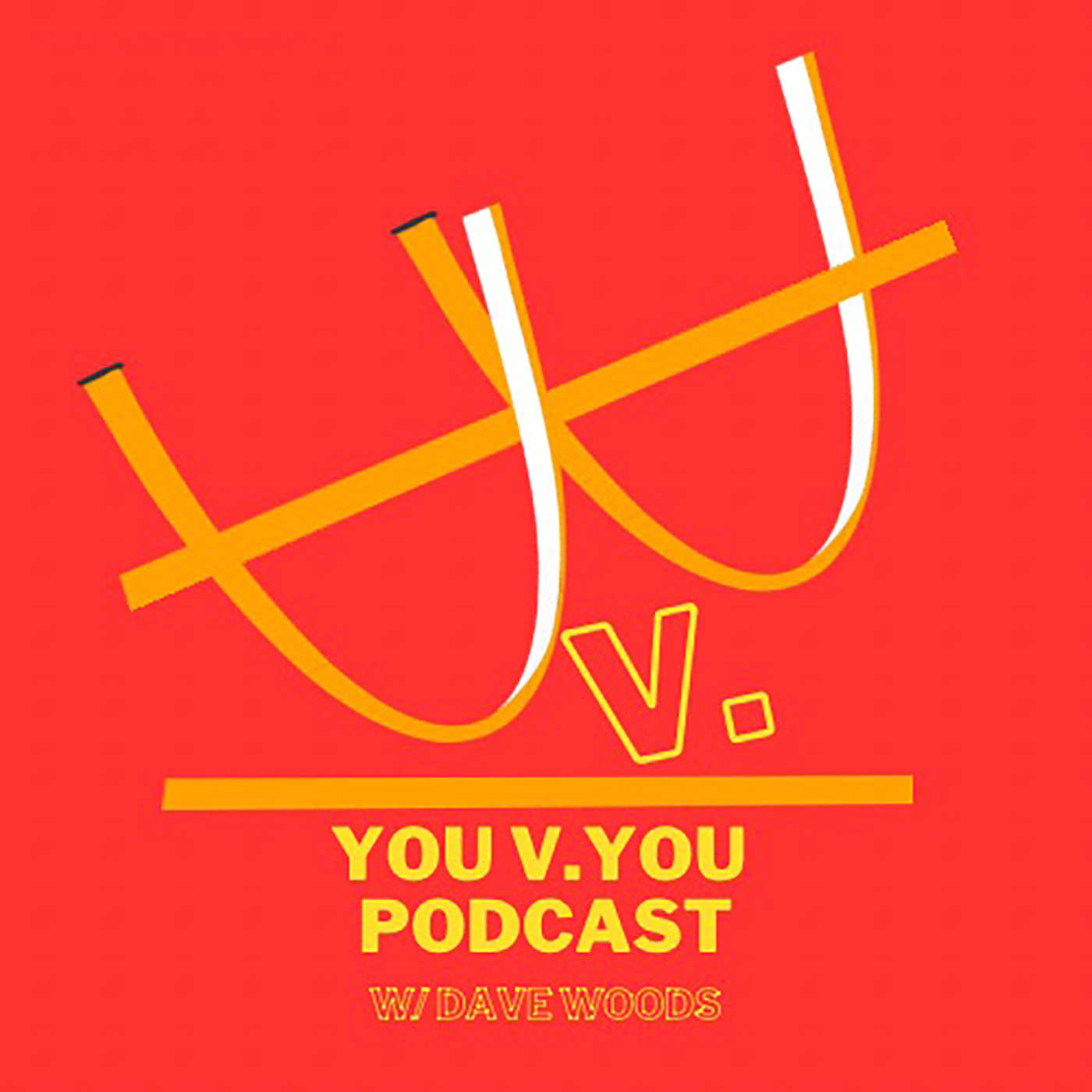
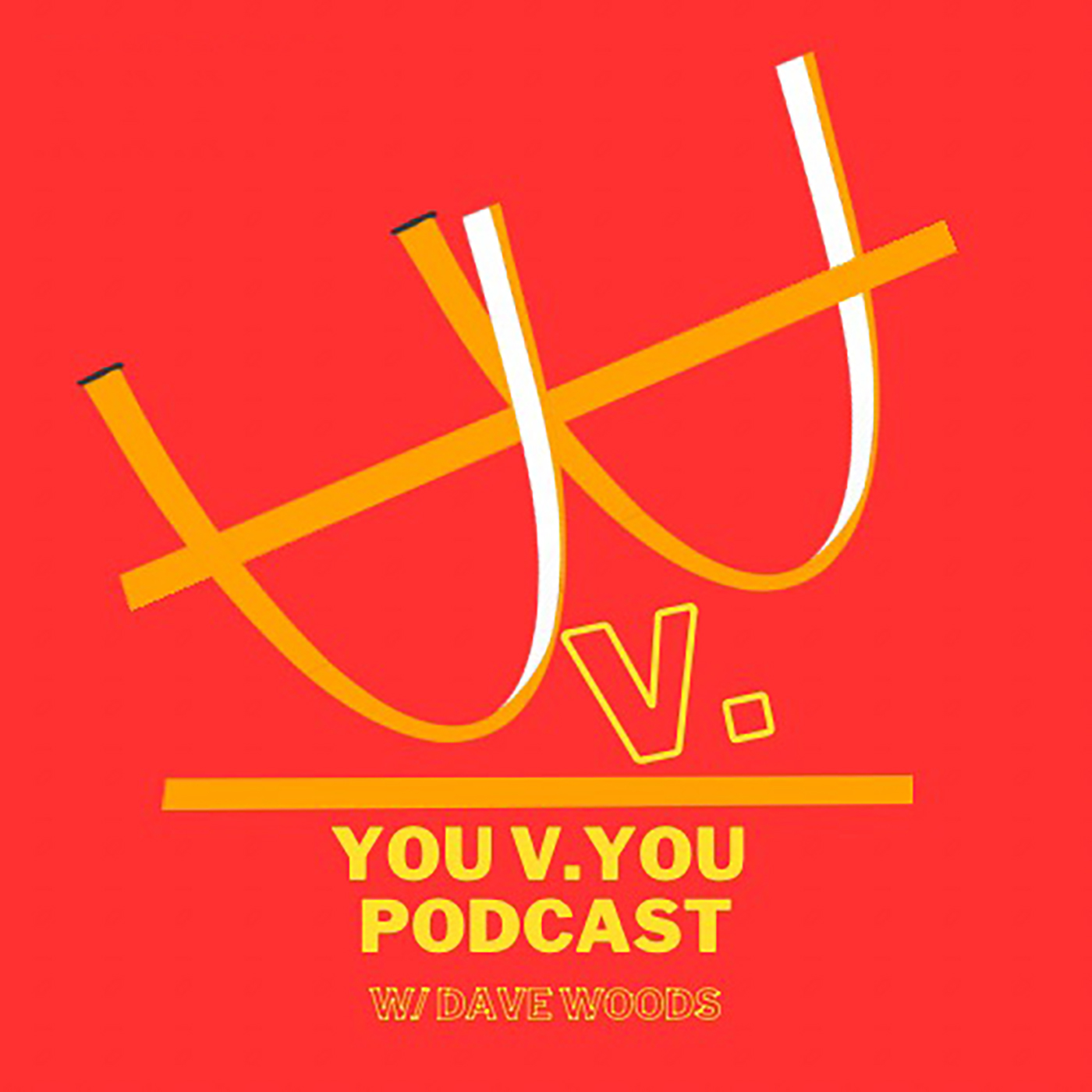
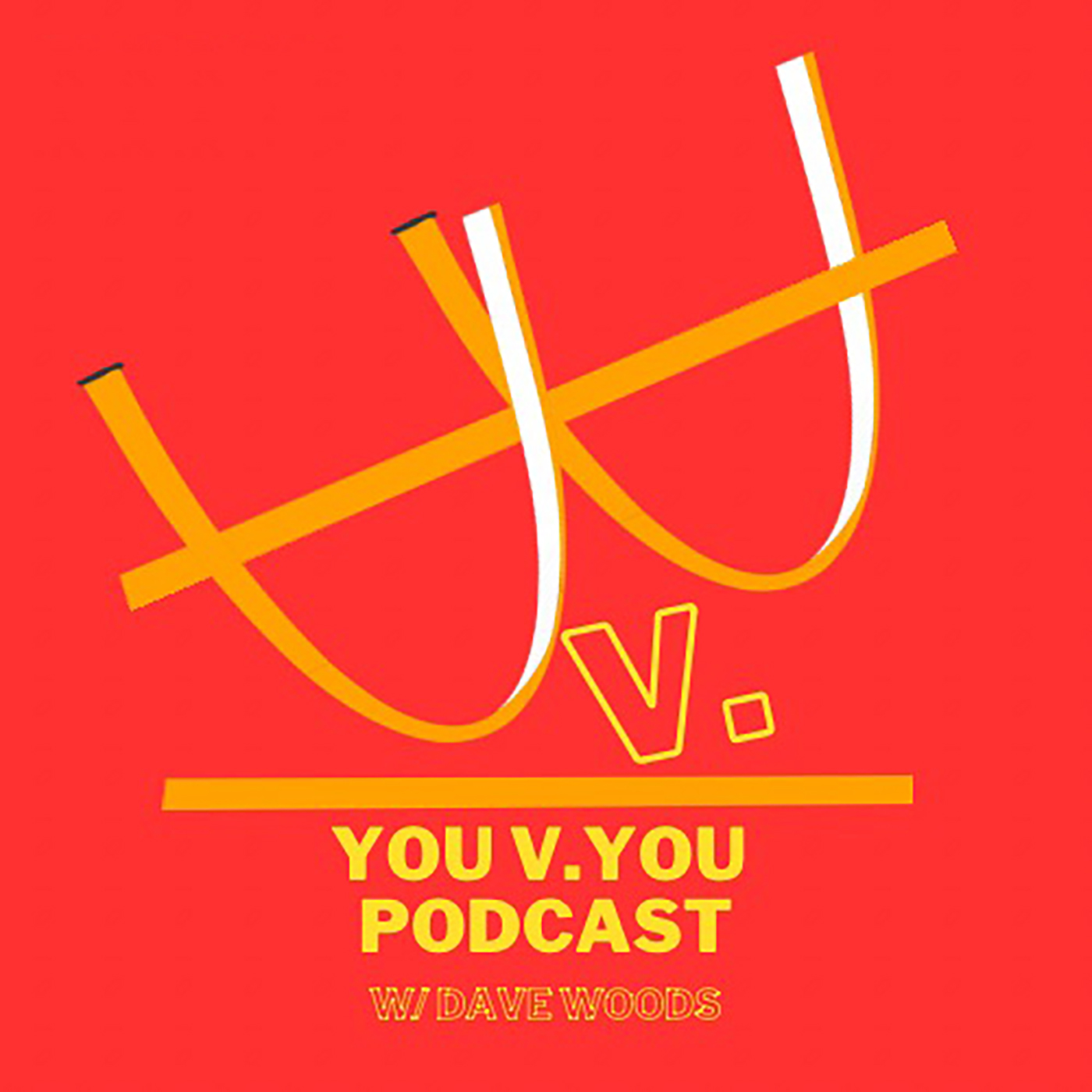
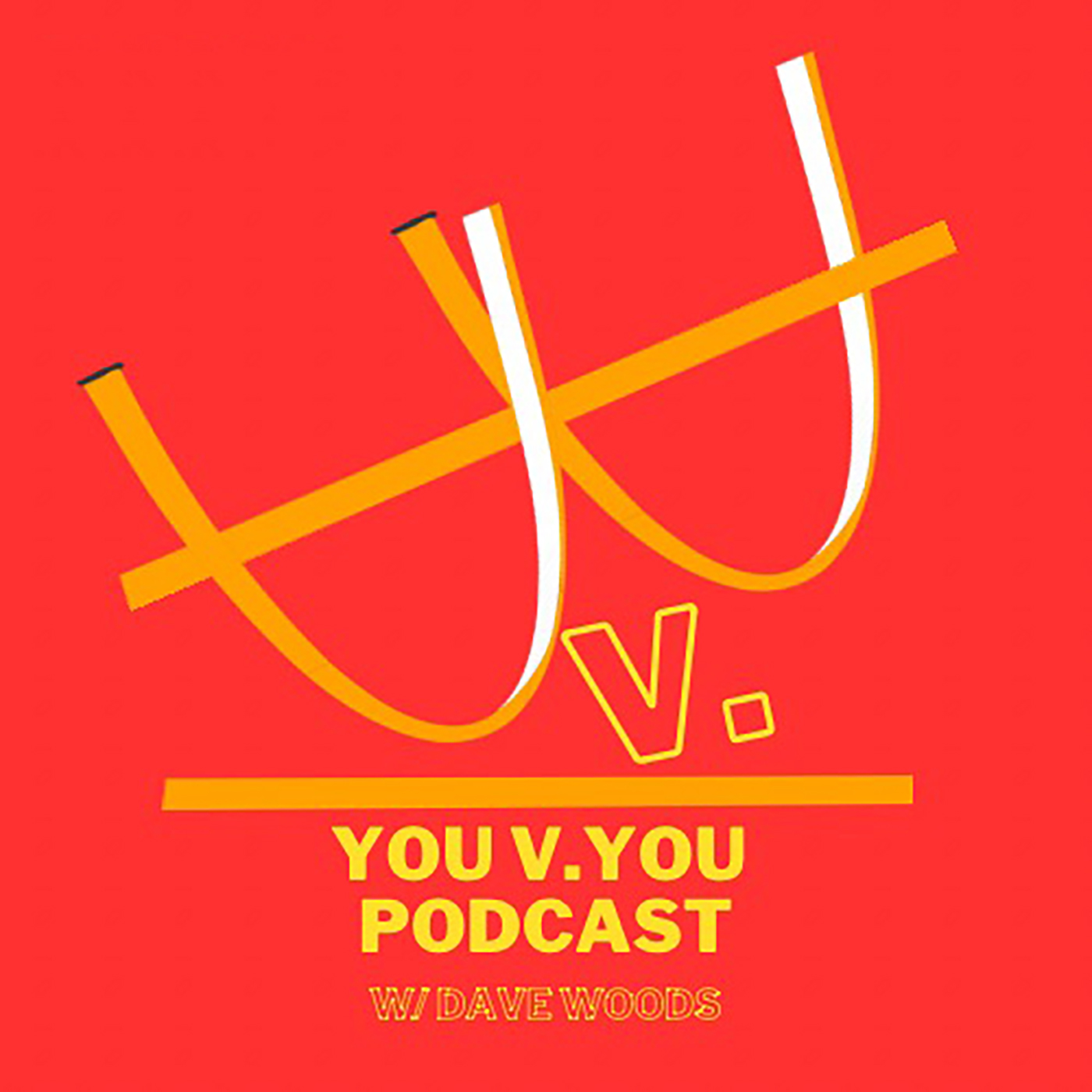
But what about the logo?
[00:04:44] Speaker B: D.
Shout out. Tell us about the logo. Shout out. Kicking on that. So I'm a huge fan of just riffs on popular logos that we all recognize, right. And just puns and things that you would recognize. When you do a double take, you say, wait a second, that's. You're just being silly. You're a fool for that one. And my favorite logo to just run away. Well, I'd say originally it was the Qdoba symbol, the cactus for the awesome burritos. Right.
But the, the most. One of the most recognizable logos on the face of the planet. Those golden arches, right.
My buddy back home, I'll leave his name out of it just for the. The Easter egg of it would call McDonald's Maki Maki Dodos. And that was like the code word for McDonald's. And we just did it just to be silly and laugh a lot. But now seeing it especially coming to America where it's like McDowell's, you know, the, the golden. What was it? The golden. The golden arcs, right. McDonald's stole it from me.
[00:05:50] Speaker A: Right.
[00:05:51] Speaker B: A little homage right there. But to say, oh, we're gonna flip it to be the. The capital U versus Capital U and treat that like the upside down arches with the theme of McDonald's is just. It's just rich. It's really full of just the full. That feel good. I just want to laugh every time I see it. I never get old. It never gets old. So. So that's the philosophy and the logo, how you'd recognize it all together.
[00:06:20] Speaker A: It pushes me away from those fries.
[00:06:22] Speaker B: Good, good. Yeah, that's.
[00:06:27] Speaker A: From that dollar menu.
[00:06:29] Speaker B: You put enough Crisco on anything, it's delicious. But that's actually part and parcel of what the problem is, right? So the going deep into losing a lot of weight when we'll say £30, £40, £50 and up is not just because of bad eating habits. Systemic issue. It has the. The domino effect of hitting other areas of your life, but it's disguised as, oh, hey, these are some delicious fries. Right? So.
[00:07:02] Speaker A: Or they have a special under, you know, one of their combos.
[00:07:07] Speaker B: Here's a special. Alicia, look how they make their chicken nuggets. Exactly right. And if I were to fast forward. Have you seen the movie? I'm gonna go check it out. I. I feel. I'm loath to admit it, but I haven't even seen Supersize. Me either. So there's a couple of these movies where I gotta check these out, but one of the. The nastiest things I've ever seen was how they. They're making their chicken nuggets. And when you. If I was just fast forwarded to that scene, you'd say, oh, no, no, that's froyo. That's strawberry froyo. No, that is pulverized chickens that are being dispensed. And it looks like fro. But when you see the scenes before that, you're like.
Right. Absolutely disgusting.
[00:07:53] Speaker A: Okay, now, sound effects.
[00:07:55] Speaker B: Let's see. Okay, let's hit attack. We gotta label these. Okay, let's see.
I didn't hear anything. Okay.
Okay, we're gonna need kike.
I think he might have deleted some of the effects or it's missing the card. But that's.
Here's the. Here's the effect.
I don't. I don't want to repulse people. If this is your first time listening. Making my own vomit noises. All right, so, yeah, that's.
That's that in a nutshell. Saying, here's something that's attractive to the eye, aesthetically pleasing. Then you look a little deep, and you're like, oh, that's funny. I get. I get that reference. You know, it's a fitness podcast. Motivational podcast. Oh, well, hold on. Why is it you versus you? So that's the rundown. That at the beginning of the day, the middle of the day, at the end of the day, it's never about any other outside force except for you. So it's you versus you.
[00:08:59] Speaker A: Nice. So now you know what's an average day?
[00:09:04] Speaker B: This. So this is the baseline foundational point, and that's why I want to talk about it for an hour is the average day.
Looks like it starts with the morning routine the second you set your alarm. And so I. You set your alarm the day before. Look, it needs to be an anticipation of what your goal is.
[00:09:29] Speaker A: How many alarms.
[00:09:30] Speaker B: Oh, I. So I actually, I set two. So I set the jar, the loud jarring one that you know, sounds like a fire alarm and hits that.
The fight or flight response, right, that's the one that I set. But then the one I set on my phone is a couple minutes earlier and it's more gentle to just ease myself up out of it. But then I know if I don't hit, if I don't get up and turn off my scary alarm, first I will be jarred awake and then it'll be the fight response. So the, the beauty of that actually is when you get in, especially if you're getting up at 4:30 in the morning, your body starts to wake up naturally before that goes off. When you, when you set your mind right and you're in your calm and you're ready, you're prepared. So one of the things, the little techniques along this, along that line is to put your alarm clock out of reach, completely out of reach. So I have my phone maybe about four feet away from where my feet are. Feet, feet are located on the bed. And so I can't possibly reach it. Even if I were to, you know, be an acrobat and go to the edge of my bed and reach over now it's not going to work. And then the loud, jarring alarm clock is about 3 inches away from my furthest reach on the bed stand. So if I were to try and bridge that gap between the three, I'd fall out of bed and that would definitely wake me up. That's the whole point, is to be able to roll out of bed inspired and then say, oh, this is the time to set my mind right.
[00:11:23] Speaker A: And if I'm not motivated though, what do I do?
There's days where it's, you know, I set my alarms and then like, okay, I'm ready to get out the door to go to the gym. And then I pulled park.
Motivation's not there.
[00:11:43] Speaker B: This is the thing that I, I try to make a point to say in every episode of Writing down the Vision.
Because when you get, when you remind yourself of the vision before you go to bed, it's going to be on your mind when your alarm clock goes off at some ungodly hour, right? But then when your alarm has gone off, you look at the vision again and then you put it, put it into motion. When you roll into the gym, you show up at the track, wherever you're doing your workout, go over the vision again, this time with your eyes closed and visualize what it's like to be where you want to be. You're at that vision already.
Psychologically, you are setting that into motion and that's pushing away the lack of motivation.
So this is going to just be a constant reminder of writing it down.
[00:12:41] Speaker A: So this brings it back a little bit to the topic from last episode where it's like finding something that you really or like an exercise that really you enjoy doing. Right. It's not 50 push ups. Find something out being on the treadmill a little bit longer.
[00:13:03] Speaker B: I, I'm a huge proponent of building your workout around the ones that you enjoy. But then there's going to be exercises that you don't like. But when you have the ball rolling and you, your, your heart rate's up, you broke a little bit of a sweat. It's actually not an insurmountable task to do the ones exercises you don't like. Right. So if you are in that, in that frame of mind, it's usually not that difficult. It's the beginning part of not having that motivation. Right.
So in the end it's gonna be worth it.
The rest. Rest. When you're, you're done, you think about how, how many times you did build up doing that exercise you didn't like doing and then you got to where you were going and said, hey, how did I do that? Well, it's because you, you shut down the, you shut down the default mode. Right?
[00:13:58] Speaker A: Right.
[00:13:59] Speaker B: Because that's, that's the whole thing you're trying to put to rest and just constantly keep behind you.
And especially with the holidays approaching, that default mode is going to be speaking a little bit louder and then motivation is going to be a lot lower. So this is now preparing yourself for that.
[00:14:16] Speaker A: Especially the weather changing. It's like about five more minutes in bed.
[00:14:20] Speaker B: About five more minutes in bed. Oh no. I feel like I might be getting a little bit of a cough or a little bit wheezy. No, no, no.
Hawk that loogie immediately and then spit it out and then have, have that tonic, right. Have the hot water, lemon, a little bit of salt, a touch of honey and you'll feel fine. Right?
[00:14:44] Speaker A: Because that happened to me today where I walked out of the house later than I. What I usually do to make it to the 8:00, no, the 7:00 class right at the camp and I'm like, oh, I could go to the next class.
That means my schedule is going to be behind. So I'll go tomorrow or I'll go later.
[00:15:07] Speaker B: Put that to sleep. Put it to death. Yeah, that's the, so that's actually part of the reason why calling an average day because your average day is going to say, oh, I'm going to be ready for this 8am class and if I can't do it and it better not because I'm not feeling motivated, I'm going to go to the next available one. And if that's in the evening, it's saying, okay, I just took the loss going on doing my average and now the backstop is to go at night. And that's actually what happened to me today. Right. And so I have my gym bag ready to go, headphones charged up, phone is charged up.
But my schedule has been adjusted.
As long as I hit those numbers and it's within those 24 hours, I'm on track.
In the the perfect day, it's me getting up at 4:30 in the morning, doing it. Right now I'm not able to do that because can't leave Catalina by herself. Right. So this would say, oh, my new 4:30 in the morning no excuse workout is going to be at 9am and that's having adjusted with knowing that on these days I have a toddler who's asleep that you know, as a single father, no one else is there, I wouldn't be able, that'd be a lack of responsibility to just leave her at home. Right. So no, no, it's not even a question. It's I now can't do that perfect day, average day workout that I was doing a couple weeks ago. Right. So that's fine, go ahead.
[00:16:44] Speaker A: And there could be an alternative for, for example, for a single parent with their child.
[00:16:50] Speaker B: Yeah. Well that's adjusting on what that time is. But now it's not as convenient. Right.
[00:16:55] Speaker A: So in, because there's gyms that have child care.
[00:16:58] Speaker B: Right? Yeah. Yeah. And that's what you, that's the alternative.
But go to the park. Yeah, but the, the time slot is the thing that has shifted. Right. And so if I'm, if I have my, my Rocky theme going, oh, I'm ready at 4:30 to just crush it at the gym. Right. If time does not permit for that, that next time is 9am If 9am doesn't work like how it didn't work today, I'm going to have to go in the evening time. And although it's better for lifting weights cardio wise, that's my least favorite time. Right. So I purposely front load the harder part, the strenuous part for the morning with the earliest time possible because I know enough about myself that come 7pm I don't want to be doing hiit training on the elliptical machine at the gym. It's gonna be packed. All right? Everyone and their grandma is at the gym in the evening. Right? So, yeah, this is. Yeah, you know what? Let me, let me 86 that. I'll say, in a perfect world, I'd have all the equipment at my house. I'd have it in home gym. But that's also not the reality. So it's. How do you, how do you roll within the variables that you do have? So if this is the.
That's the mindset for going into it for the perfect morning and then saying the average day looks like this alarm clock goes off. And I set my mind right by having reviewed the goal. Not only did I review the goal the night before and went to sleep on it, but woke up with it on my mind, ready to rock.
Pull up to the. The gym. 2 minutes and 13 seconds. You know, that's the symbolic of that, that scene In Rocky Round 14, Apollo Creed gets knocked down. Then it's building up to, are you going to stay down or are you going to get up and fight the hardest, Hardest round. Right. So.
Oh, we might have to break out the paper checklist of how many times I say so.
No, don't do it, don't do it. It's gonna. I'm gonna have to have my eyes closed so I don't distract it when I see you mark it again. And it's sort of like that. Did you see the movie Fifth Element?
[00:19:14] Speaker A: No.
[00:19:15] Speaker B: Oh, man. You need to check it out. At the beginning of the movie, there's this kid who, like, they're doing this archaeological dig and you know, they're somewhere in the Middle east and this little kid is reflecting the light down this, you know, the archaeological site. So they have light. And the guy who's excavating, every time the light moves, he's. It's because the kid's falling asleep. He's nodding off and not holding the mirror. He's like, aziz, more light. And then the other guy is like, aziz, more light. And he marks a little check mark over it. He's got a bunch marked off. So that's, that's the, that's the whole thing right there. I'll immediately start laughing and go see is more light.
[00:20:04] Speaker A: Yeah. So. Well, let's continue.
[00:20:06] Speaker B: Let's continue.
[00:20:07] Speaker A: Let's see if we hear it. So, no, what would you tell the person who's intimidated? I mean, now that we're talking about alternatives, right? What Would you tell the person who is intimidated by going to the gym or by the gym?
[00:20:22] Speaker B: I'd say it's you versus you. There's a lot of the workouts you can do, not in the gym, but there comes a point where you're gonna need weighted resistance and that is when you're cooking with gas, when you have that weighted resistance.
So if you, if you have the access to heavy things and that you can record what your average is, what you're, what you're, if you're able to review those notes from moving the heavy objects, then go about it anyway, pick up stuff that's in your garage or miscellaneous things around the house. But the perfect, I should say perfect. The, the, the thing, the fear of going to the gym comes with a price, but then also what you can do to circumvent that, overcome that fear. And a lot of times it just has to do with unfamiliarity, with the layout. You know, people are always the same wherever you go, whether you're at LA Fitness 24 Gold's gym. Name, name the joint, right? There's going to be some mega bros there, there's going to be some semi pro people, there's going to be some professional athletes, right? Probably not regularly at a certain gym and then more likely at another gym.
But there's still different levels of, of what you know and how you carry it. So I think for the person who's unfamiliar with the gym, they assume everyone is professional XYZ person. And that's just not the case, right? You have all shapes and sizes, all ages, all levels of experience. So if you are intimidated about the gym, get a gym buddy, go with someone who does know what they're doing or go in there saying, oh, I'm going to sign up for a personal trainer. And then when you become more, more of a regular at the gym, you'll see, you know, people are people no matter what country you're in too, no matter what, they're all in the same boat. And so this now goes back to it's you versus you. @, @ a certain moment in any, any workout routine, there becomes a, you need to push harder, right? So we'll say you're week three having been brand new. You can adjust the weights to be something that they weren't before. And you'd have not just a psychological marker, but then a visual of knowing that you used to do 10 pounds, 91, 12 pounds, 15 pounds, 20 pounds, 50 pounds. But the, the workout buddy or going with a group or having a personal trainer Will, will definitely be a push. So, yeah, I think half of it is just not knowing the lay of the land. But then when you start to go, oh, you know, fast forward in time one year into going to the gym for the first time, it's way different. And you'll, you'll even laugh, you'll say, oh man, what was I. I was so scared about this place. Right?
[00:23:34] Speaker A: Yeah.
[00:23:35] Speaker B: So, yeah.
[00:23:36] Speaker A: And even though there's others that are, you know, more fit for gyms, their thing. Right. Not the gym's, not for everyone. But even if the thing is that you started, I think, you know, the fact that you started going to the gym, making it a habit. Once you start, you start. Yeah. Increasing the weights. But you know, it's been always my fear as well now that I've been weightlifting, you know, little by little, increasing the weight.
What if I get huge?
[00:24:13] Speaker B: I'm gonna stop you right there.
Whether you're a guy or girl, you're not going to get huge by going to the gym. There are people who train their entire lives to become IFBB pro and they still don't win. So you don't think you're gonna do 10 push ups and all of a sudden your traps are gonna be bursting out of whatever outfit you're wearing or all of a sudden you got tree trunk legs. That's. That's not the thing. That's false. That is false. There are very few instances where average person who was not an athlete or thought of themselves as an athlete starts working out and all of a sudden none of their clothes fit because they've been going to the gym for eight weeks. That's just, that's false. There's. If you are doing sports enhancement drugs, you know, chemically induced something. That's the only way. Yes. I don't want to. I always hate saying the word steroids. I've never taken steroids, but I just still don't like saying it. Right. If you're taking steroids. Yes. That is a legitimate fear. That's what you should, you should be scared. Then you should also be scared that you'd be growing a beard because that's what would happen if you're taking steroids. Right? Yeah. Yeah. It impacts the, the body in terrible ways. Right. Yeah. There are arguments about HGH after retirement age where it be able to. Hgh. Yeah. Human, Human growth hormone.
[00:25:37] Speaker A: Oh, yeah.
[00:25:37] Speaker B: It's a, A steroidal compound without being. I'm pretty sure it's not illegal.
It's illegal in sports for obvious reasons. But the that's an argument for another day because I don't think many 65 year olds who are not familiar with the gym are going to start going to the gym and taking HGH to just be in shape. Right.
[00:25:58] Speaker A: That's, I don't know because I, I start seeing, you know, when I'm lifting the bar, I start seeing my veins like pop.
[00:26:05] Speaker B: I'm like, that's vascularity. Yeah, exactly. So that, that's actually a really good sign. Cuz that means oxygen is going to the, the muscles, it's circulating as it ought to be circulating and then your body is reacting to the stress. So that's a, that's a good sign. That's the pump right there.
[00:26:23] Speaker A: Yeah. My goal isn't to be, you know, huge or you know, have like muscles or not defined. Right. You know, but yeah, that's my feet.
[00:26:34] Speaker B: Okay, look, look at, we're gonna use.
[00:26:36] Speaker A: It like when you see in the magazines, you know the weightlifting.
[00:26:39] Speaker B: Yes. So.
[00:26:40] Speaker A: Or Venice beach one.
[00:26:42] Speaker B: All right. Venice beach is more realistic because that person actually looks like that and they might be having taken some, some chemicals. Right. But the, the way to holding a physique that is vascular and veins popping out everywhere doesn't happen from going to the gym for six to eight weeks. You build up to that. Right.
And so I think that the whole thing that I'm getting at while answering this question is that is, that is a fantasy that's been turned into a fear that is just not real. Right. If you look at the physique of LeBron James, Serena Williams, name the athlete they are.
The. I don't even want, I don't want to say freak of major. Not a freaking major. But there's the, the perfect lineup of discipline, focus, making that your life.
And then the training on top of that, that they've been doing for life to look like that. And when you look at other people in their position on the opposite teams, they don't look like that. Right.
Just think for a little bit.
Yeah. This is Arnold Schwarzenegger. Look at a picture of him as a teenager and then in his young 20s and then when he's 28, those are extreme gains, extreme gains that just are not realistic for 99%. What about now? What about. Yep. So that's actually the contrast. It say, look at him now, haven't been retired for how many years?
And then say, oh, okay, well, he had access to. Well, one. He's a pioneer. So I'm not gonna, I have nothing negative to say about that. But the, the Whole thing is, you're not the first person to ask that question. No, I'm afraid of getting huge. Yes. This is not gonna happen. Right.
Girls and guys have said that if I train like that, I'm gonna get huge. No, this is a great. Another way to contrast it is look at my physique, right. If I, if I showed you a detailed workout from even before I lost £100, you'd probably say, oh, I figured you'd be in more shape.
That's what it looks like. Because I've been training since I was 14. I wasn't always doing the cardio part and definitely was not eating right because I wouldn't have gone up £100. But it's still moment of what it really looks like if you train hard and for an extended amount of time. So in this moment, it's four years of training to be where I'm at right now. And if you, if you didn't know the backstory, you might not even, might not even know that I lost £100. Especially if we're new to just chopping it up for familiarity, I should say. So. Yeah. This is, that's, that's a common misconception. And then I'll say, why don't you try? Try. If you're afraid of having tree trunk legs, let's see how, how much you can squat and then just try and break that record every year. And then at that point where you have veins coming out of the, the teardrop in the quad, when you have veins coming out of your legs, like right there in the quad, then you will say, yep, I, I was wrong, Alicia. You did lift too hard. Right. But it's not going to be, it's not gonna. You're gonna see it gradually become what it is, and it's not gonna be three months later, not gonna be even nine months later.
[00:30:27] Speaker A: True. Wow. We'll see.
[00:30:31] Speaker B: I challenge everyone listening, say, without taking performance enhancing drugs, get. I want to get as big as possible, see what happens. Yeah.
[00:30:43] Speaker A: As we, yeah. As we continue to talk about an average day, with how, you know, everything is changing. Right. Technology, we're becoming more being at home or more robotic.
How do you think that could also affect our average day?
[00:31:07] Speaker B: Well, I mean, I think it builds into the sedentary lifestyle of just not moving and then gaining weight.
And then, you know, that actually goes the jet or what's the. What all the characters from Wally.
That's. That to me, that's a terrifying movie. Right. Just for seeing how almost prophetic that is. Of saying, oh, hey, you know, as technology advances, we have to do less and just let the machine take over. But then how that affects the human body.
So I actually don't think about that much because it's you versus you.
[00:31:50] Speaker A: Right, Exactly. But I'm, you know, I'm just thinking because while in my field it's, you know, the whole AI is going to start affecting and I think in all the industries.
[00:32:02] Speaker B: Right.
[00:32:03] Speaker A: But now it's like, how is it going to affect the human life?
[00:32:07] Speaker B: Right.
[00:32:08] Speaker A: Obviously, you know, in. We have to see it in a ethical way too.
[00:32:15] Speaker B: Right.
[00:32:15] Speaker A: But yeah, how can it affect for those that are not, you know, don't have a discipline yet in their lifestyle.
[00:32:25] Speaker B: That'S, that's the habit that needs to get broken. This. Wow. No matter what happens with technology, it's still going back to the basics of running, jumping, swimming, walking, climbing, pushing, pulling. Right. All those things should be part of your, they're part of your daily habit need to move. Unless you're wheelchair bound or in traction, there's no excuse why you can't walk around.
But then the next part is training and doing something that you haven't done before. And typically that's lifting weights.
Any of those movements, whether you're standing up out of a chair or bending down a tie or shoe, and you're on one leg and you stand up like that's, that's a lunge right there.
Pulling yourself up or twisting, doing, moving the transverse abdominis where you're, you're moving forward and twisting to the side. You know, that's, that's actually where the word oblique comes from the side. And then moving, all of those things are. Should. You should not have pain doing, doing those movements. But then when there's resistance, your body adapts to it faster than you think. So snapping yourself out of that, out of that malaise. Did I say that right?
I don't know. We're at the fact. Check that later, Kike. You don't have to edit that out.
Snapping yourself out from saying this is what average looks like. That's actually the whole point. Point of the training part. When you're repeating that motion and it's under tension, that's where you get stronger. So we're not saying make these tremendous gains right away. It's moving away from what that default was and then getting stronger from there little by little.
So going back to your, your question of, of saying how's the, How's AI impacting it? I'd say just strip it away for a Little bit. What's the workout gonna look like without a phone? Right. You're still able to move the bar if you're not listening to music or looking at your phone or looking at the routine or answering phones. Like, I'm definitely a huge fan of not answering the phone at the gym, but the whole thing is having that understanding of what you're doing and why you're doing it. That's why I keep harping on go over that goal and what does it take to get there? So regardless of if you forgot your headphones, you do have your headphones. Your phone's working, Your phone's not working. You should be able to break a hard sweat whether you're at the gym or at the track. Walk around the neighborhood. And I guess tangentially, I've been getting a lot of feedback about the card game trick, right? And the variations of it. That is the great starting point of going through these movements. Start with the ones you like, then incorporate ones that you don't like just so you have overall health and don't become injury prone because you're neglecting certain areas.
But if you're. If you start with 10 cards and you're doing the exercises in the next week, try and do 12 cards a couple weeks, work up to 20, then go for personal best or personal record. You know that pr.
Try and do all of them.
What can you hold and do that's challenging enough? You're like, man, I wouldn't, like, want to do that again. But not hard enough. Where you get burnt out doing. Doing it. Go for that. And then keep it around there so you're moving the sticks in terms of what your average is.
Nice. Okay, Just challenge.
[00:36:30] Speaker A: Yeah.
Okay, well, now we have the workout, right? The physical. But now, okay, my mom, the way she cooks, or when I go to my friend's house or.
And they cook a certain way, how can I also make adjustments right when I go somewhere?
[00:36:52] Speaker B: Yeah. All right, so this. This. This question is a little too real because this happens to anyone who is not living in a cave, right? So you have pretty much three options. You could either say no, which is very hard to do, but then also might come across as rude, or you can adjust to the things that you're able to eat at the person's house, especially if you live with that person.
But then how do you prepare for that? And that might actually be where the secret sauce is, saying, if you know you're going to some event, birthday party, dinner party, whatever it may be, eat beforehand. If you did not eat beforehand. How can you incorporate most likely veggies, more veggies into it? So the thing that I would recommend doing is accepting whatever that dish is, but a smaller portion, and then supplementing it with the salad or put in the default thing there and then eat that part first, drink a huge glass of water and then eat that, the food that was offered to you. And you will have modified what could have been actually sabotage to what your, your workout or your, your diet was. Whatever those restrictions are there, there are definitely times when you can't really make an adjustment, right. Maybe you didn't have that bull of cereal in your, your meal prep container in your car, but that should be an outlier, right? And, and so if you, if it's Thanksgiving, right, I definitely would start with doing, doing some of those push ups, doing some of those lunges, doing some of those crunches, eating a salad first, drinking a big glass of water than having a moderate sized plate.
But you're gonna have to be hyper aware of that for every meal, especially during the holidays, because that, that bounce back afterwards is very hard. And that's embarrassing to say. What is it? You know, 10 months later, I'm adjusting back to what happened last year, right? And so it's not a huge.
I'd say it's a pitfall, but it's not in something that's insurmountable, but it's now saying, hey, my physique is different than a lot of other people's physiques. And then my body is able to handle things. My body doesn't handle things like how other people, how their bodies handle things. So I can't eat how I used to eat, especially in the troubled times, which is leading up to Halloween, Thanksgiving, Christmas, New Year's, Valentine's Day. Like all, all those things are workout sabotages, lifestyle sabotages. So without becoming a recluse, how do you adjust in it? And that's up to each person. But be very aware that this might be the thing that is keeping you back from having, from losing those £15, £25, £30.
Well, hold on, let's rewind a second. We'll let that settle in. And because the whole thing, the whole point of this episode was the setting up the average day and then having that backstop just in case Murphy's Law comes into play and you can't do what you do on that average day.
I really have it set up on three tenets, and it's being the workout, the refuel and recovery, and then the rest Those three tiers to make up the new average will keep you on track.
[00:40:55] Speaker A: What was that again?
[00:40:57] Speaker B: The workout, the refueling and recovery phase and then the rest. Right.
If you have the tight parameters around those things, you're going to be just fine for however long it is, whether it's the 68 week program or that's just what your life looks like now.
[00:41:18] Speaker A: Then you have the consistency.
[00:41:19] Speaker B: Yeah, that's, that is, that's, that's the theme. Consistency. You will be consistent.
It really depends how fast you want to get to that goal. You know, the hypervigilance on it is, is great for, you know, those eight weeks and then when you adjust to it, oh man, you're there. But then we're gonna have to say no. Somewhere along those lines, like all of those things, right?
The leisurely activities. Is it, is it leisurely or is it set up for failure? Right. Oh, my leisurely activity is going to the bar and having whatever food. Well, you're gonna have to say no. You're gonna say no to that.
Might be for a time and season or I might say I'm severely limit my time at that place. Oh, I, I have to say yes to every invitation to a birthday party, right? No, you don't. You know, you can also show up late and you'll also leave early. Right.
This is the, the preparation for the things that are going to come in contact or conflict with what your goals are. And I said before, darn it, I'll say it again.
Write the vision down and keep reviewing the vision.
[00:42:36] Speaker A: Even though we're on the 10th month of the year and our new year resolution is out the window.
[00:42:42] Speaker B: Out the window? Oh yeah, yeah. Oh, definitely make it the tenth one. Well, it depends because if, if your goal, let's say it was something non physical like reading books, if you had chosen five books to read in 10 months, you could, if you had been disciplined and consistent, you probably would have finished those 10 books, right?
I'm a huge fan of reading one or two pages of a book a day because in 365 days you'll most likely have finished that one book. So there's no reason why you wouldn't be able to push a little harder and say I'm gonna read three different books, but approach with that same mentality, two pages a day. Those are the micro adjustments to break the old default of not having read those books. Because the statistics for the average American is after, after college age 21, 22, the average American reads one book, right? That's, that's deplorable. Unless. Well, if it's reading the Bible, yeah, sure. Well, that's a life. That's a lifetime of reading. Right. Wow. But, yeah, if you consider that, like.
[00:44:00] Speaker A: Oh, now we listen to audiobooks.
[00:44:04] Speaker B: Audio.
[00:44:04] Speaker A: Not.
[00:44:05] Speaker B: That's. Then there's definitely no excuse for audiobooks, because if you. If you listen for five minutes, that's probably going to be more than what you would have read in two minutes.
[00:44:15] Speaker A: Wow.
[00:44:16] Speaker B: Right. So that's actually the secret to crushing books in my world, is listening to audiobooks or things that are pertinent to my field and my interest, but then limiting myself because, you know, if I were to open my phone right now and show you what people are texting me, oh, hey, look at this YouTube video. Oh, hey, look at this. Oh, listen to my podcast. Except for me, because I like listening to you versus you.
Look, if you add up those minutes for, oh, I'm gonna look at this video. It's two minutes. Oh, this one's ten minutes. Oh, this one's an hour.
You're able to do that in 24. You have 24 hours a day like everyone else on the planet. But if you tally up those hours, those minutes and hours, you can definitely sacrifice to do two pages a day of your own book that you're. That you chose to read and then, you know, listen to whatever it is. Yeah, Right.
[00:45:18] Speaker A: Like, I've seen a few books that I. That I own, that I have, and I've seen them on, like, as an audiobook or on YouTube, and it says it's only an hour or long, and it takes me forever to read it.
[00:45:34] Speaker B: Yeah.
[00:45:35] Speaker A: I'm like, wow, and an hour. I could actually listen to the book.
[00:45:39] Speaker B: Let me. Let me break it down to you like this, Alicia.
Do you remember having a syllabus and seeing what that reading was?
We never really paid attention to how long it would take, but you definitely carved out time in the day to do it because you knew you were. You were a student. That's what your life was.
[00:45:58] Speaker A: Or they forced you, like. Yeah, 30 minutes a day. Yes.
[00:46:01] Speaker B: But everyone reads at different speeds and. Right. A different kind of different pace, and then takes in information differently. But when you had it on your syllabus, you knew, oh, I'm taking this finance class class. There's going to be X amount of time for homework. And then one of those things is doing the reading. Right.
And so it was just ingrained in your schedule.
You could still do that same thing right now and treat it with, say, your new Year's resolution of reading five books. If you said you remind yourself October 13th, 12th, my bad, I'm already living in the Future.
If it's October 12th and you had had that syllabus on your calendar, you best believe those five books have been done already. Right.
So yeah, it's, I hate talking about, you know, peripheral things that I do. Right. But that, that is actually the key to success for me being an avid reader. Just two pages a day with whatever book I'm reading and then listening to the audiobook version of it too. So before I go to bed, I'll read, I'll read something. Right. It typically is a scripture, but other times it's usually something of spiritual nature. So John Paul Jackson is one of my favorite go to guys, especially with dream interpretation and just the prophetic. But the whole, the whole point is still saying there's a marked out time for quieting, quieting myself down, calming my mind and reading. Because it does demand a certain amount of focus. And then with that focus, oh, that's great for right before bed because I'm able to ease in the sleep and have really deep sleep. And that's the third tier, right? You know, the workout, the refueling and recovery, second tier. And the third is rest. If you, if you're getting deep sleep, oh, all of a sudden you don't have half as many issues because you're not overwhelmed, you're not sick, you're definitely motivated because you've been recharged.
So yeah, that's a, that's part of the domino effect for those three tiers. And that's in a way part and parcel for what the systemic issue was for getting out of shape, being overwhelmed, bogged down, stressed out, and then there was no release for that. All that, that, that energy, that kinetic energy that's just bouncing around. But it's looking at something in a negative sense, right? It's going over fears, it's reinforcing negative talk. It's feeling like everything is just dismal. And then all of a sudden I'm bugging out and I feel like I'm always on a time crunch, need to go busy, busy, busy, busy to get things done, but not feeling like I've gone anywhere.
The one that changed everything was working out right. All of a sudden, a 10 minute walk after eating a meal, I'm taking in new information that's not on my phone, it's not coming from a book and observing the atmosphere. Oh, hey, look at this tree. Oh, look at that building. Oh, wow, that's A different type of caterpillar. I don't even remember the last time I saw a caterpillar. Right. Just having those. Those spots that aren't structured on anything except for the 10 minutes of low impact cardio, that's. That changes the game. So now my stress is going down. The blood is flowing from the stomach back to the head, and I'm not feeling lethargic after a meal. That adds up 30 minutes a day in super easy.
Now I. I'm thinking about other things outside of myself and how much time that I have to complete those things.
[00:50:02] Speaker A: Yes. Wow.
So what would be the five points?
[00:50:08] Speaker B: Gotcha. You just said so. You just said so. So Alicia. Alicia won. Dave Woods 75.
The. The five points for what?
[00:50:21] Speaker A: For an average day.
[00:50:22] Speaker B: Oh, man. Yeah. Which is the whole point of this episode. So the. Oh, no.
76. Okay. The. The average day is. Is going from what your default was. So you had the. The way of doing things that led to that point of saying, I want to make a change, but am I going to make a change? Can I make a change? How do I make a change?
That is the old version. The new version starts the second you can see with that idea. And then write it down. You have to write it down, though, putting it into practice because you came up with the strategy.
This is what I'll do.
Monday, Tuesday, Wednesday, Friday.
It moves into.
This has now become the pattern for changing up what the default mode used to be.
And now it's saying, okay, now that you. You hit that first goal, how do you not fall off the wagon and then eventually find yourself back in your default default mode? Right. So I'm a huge fan of reviewing pictures of what you used to look like.
All right. Just look that. That version is waiting for you. It is waiting for you. I. I see it come. That it starts to sneak out come January, you know, after. After feasting as the vacation. Right.
[00:51:49] Speaker A: I showed you my before and after.
[00:51:51] Speaker B: Yeah.
But if you. It's phenomenal, too. That's why I'm like, hey, we got to do this podcast together. Because this is great. And it. Actually, there's a bunch of people I'm meaning to get on the show to talk about it, because fear is a great motivator. It shouldn't be the ultimate motivator, but when you look at what you look like before you started working out and making that going, embarking on that fitness journey, that clears out all the mess and saying, why am I doing this? Because I know that person is that version of Dave woods is waiting for me, right? So I don't, I don't want to do that. I don't want to go back to that, especially the older that I get.
So the. You know what I like saying. So I'm just, I'm embracing it. So don't keep track anymore.
[00:52:40] Speaker A: I lost track.
[00:52:42] Speaker B: I'll just, I'll fill it in. I'll supplement my vocabulary with some GRE words and no one will be none the wiser.
The, the whole thing that I'm getting at is when you create that new average day, there comes a point where you push yourself a little harder. You then separate yourself from what that new average was.
And for me, it looked like knowing why I was doing the workout, doing the training, but then constantly reminding myself of it as a point of ingrained motivation. That self motivation comes from knowing if I stop doing this, I will get out of shape.
How fast do I get out of shape? No, pretty quickly.
But if I'm consistent, that's not, it's not happening, right? It's just not happening.
If you have your goal set up and you're getting closer to that goal, set up your second huge goal, right? So when you've hit that, when you finally reach that destination, especially if it's 15 pounds down, it's not a surprise that you're actually having to get to work again on something harder. You've evolved, you've hit that, that metamorphosis.
You've leveled up now. You can handle it.
I would not have been able to handle a two sessions of fit training, like at an actual field sprint, the 60 yards, 40 yards, 60 yards, six times, twice a week. I would not be able to do that. Three years ago, getting up there now, it's more like, do I want to do this? Can I do this? I know I can. So it's on me to do that.
It is a great way to, to torch fat and to build up your cardio capacity, your VO2 max. So there's no reason why I can't do it. It's not like my knees are going out or my back hurts. So that's the, the whole thing is what's going to push me to do that, hold that consistently. And then when I look back on a photo of this time period now, I'll say, oh, yeah, wow. I was really in shape to do that. There's. There's people who would, who would kill to be in the shape that you're in. In the position that I'm in, the shape that I'm in. But who, for whatever reason, can't be. And thinking about that a little bit beforehand makes me inspired to do it while I can.
[00:55:37] Speaker A: Exactly. Absolutely.
Yeah. For, you know, to continue in working. Of course. And it's like. Like, for example, for you, for Catalina, you know, for your family. And likewise, I, you know, my family as well, too, where my strength is needed physically, emotionally, and mentally. Because, you know. Yeah. At the end of the day, we have to tend to our family, so.
[00:56:06] Speaker B: And it's much better when you're in shape.
[00:56:08] Speaker A: When you're in shape. Yes. Or you have to, you know, when you go to school and the elevator isn't working, you have to take the stairs.
[00:56:17] Speaker B: Take the stairs.
[00:56:18] Speaker A: Oh, huffing and puffing.
[00:56:21] Speaker B: But imagine that's another great micro adjustment is just not taking the elevator. So take the stairs. Every single time you see stairs when there's an elevator option. And that first. That sounds like torture, but I do it all the time, right? So the only time I take the elevator is when I'm with Catalina because she's not climbing up four flights of stairs.
But the. The whole thing is, if you knew next week there was going to be a physical demand, like no one else was doing it, but you had to do it. You had to step up to that invitation for it. Would you be able to do it?
Could you. Could you do it? Right. And for me, stuff like, oh, carrying.
Oh, let's go with the.
Okay, here's one.
If Catalina were to wander away from me while I'm unloading the car, how fast would I be able to move to grab her back to safety. Right. Especially. Especially in the parking lot. That's why keep my eyes constantly on vigilance when they're in a parking lot. I say, you know, don't get out of my. My arm's reach. Like, oh, get out of the car. Stand right near the back tire right here. Or stand on the curb and constantly have my head on a swivel when she's on the curb, how fast would I be? How long would it take to just sprint and pick her up?
So that is.
It's key to me not skipping, stretching, right? I try and stretch for 30 minutes when I'm working out, and then when it's time to, say, watching YouTube or whatever, movie, stretch in between time, too. Like just getting the habit of taking a little bit of a moment to do a little bit of a stretch just so that I'm able to work on the flexibility. Break up the lactic acid that's built up from from working out, keep the muscles moving, have the blood flowing. So you know, nature. A lion, a lion stretches, right? Stretches first before it takes off.
The, the, the cheetah stretches forward, starts looking at the, the gazelles, right? That's. Well, beforehand. Your dog, your dog, House Modi wakes up from the nap immediately. She stretches and that's ingrained instinctually. Right. So there's no reason why we shouldn't be able to do that.
[00:58:58] Speaker A: Yeah.
[00:58:58] Speaker B: So yeah, that's, that's the whole thing. Imagine there's a tragedy, right? There's a car crash and you're involved. Whether you're in it or you witness it, you go to hell.
You don't want to throw out your back trying to help someone. So right now, here's that training for that.
[00:59:19] Speaker A: Right now. I just thought about a friend who took her daughter to Disneyland and they didn't allow her to get on the ride and her daughter wanted to get on the ride. And it's just, she said, that's when I realized that I wasn't focusing on myself, that I wasn't a priority in my, you know, in life.
[00:59:42] Speaker B: Oh, you mean physique wise? Oh, yeah, yeah, that's. Oh man.
[00:59:47] Speaker A: So it's where you're not including yourself in your average day too, because, well, of course you have other priorities, right. In this case, she had her, she has her family. But then that's what she realized, oh, I have to do something about, about my health. What am I doing and what's my average day? But where I'm included.
[01:00:08] Speaker B: Absolutely. And that, that situation is all, all too real. And let me just tell you this. When I lost £100 and I went onto an airplane and buckled myself into the seat, there was such relief having so much slack on the seat belt when at 3:35 sometimes it wouldn't even fit, right. I pretend like it fit like I put it close and put my arm over my seatbelt. Right. And pretend like I'm asleep. So let's do it. Steward. Steward. It.
The, the flight attendant. Flight steward would just, oh, that person has to go on. Right. But then to not hide it and then there's nothing to hide. That was something that was almost a foreign concept. Right. So there is such relief when you, you have a wake up moment of saying, oh man, I need to prioritize, prioritize my, my health. And then work day in, day out, you're now your average day looks like this. You've adjusted to working out.
Three months later, you're going to look different and feel Different. A year later, you're going to feel different and look different. Four years, four years later of that consistency, there will be changes.
[01:01:26] Speaker A: Right.
[01:01:29] Speaker B: You don't. All right, that's. That's. Let's say that's phase one. Right. Because that person would have went from not working out to working out and then seeing the results.
The next level will would be saying, oh, if I've been going to the gym now for two years, do I look the same as when I did a year ago?
No, I've been going to the gym for 10 years. Do I look the same as when I did 10 years ago? And there's. There's plenty of people at the gym who look exactly the same as day one than to day 1,000, day 10,000. Right. And I'm not making too much of a critique on that. It's more saying, you're gonna have to challenge yourself and push harder for that challenge and to maintain it. Maintaining still is a challenge for not having done anything previously and then, you know, not being able to enjoy time with your family or doing whatever that entertaining thing is, like going to the amusement park because you are too large. Right. So, yeah, this is the whole thing of changing up what your habit was and then sticking with it and then remembering why and then pushing harder.
[01:02:52] Speaker A: What's your why?
[01:02:53] Speaker B: My why? Oh, easily Catalina. Longevity with Catalina. Then also to be a temple of the Holy Spirit. And you might think St. Paul had said that. Schwarzenegger said that pumping iron said, oh, my body is a temple of the Holy Spirit. Right. So the.
I think the.
The looking. Looking better, like, more aesthetically pleasing and feeling good. That's a. That's a side effect. That's a consequence of that consistency.
Because I don't know if there's ever been a day.
Well, maybe. Maybe I can name a couple times I'm like, I'm gonna go, here, get a pump on. So I look good for Marianne. And that's. That's not the typical motivator. Right. Because what did you say earlier, like, one of the opening questions about being motivated.
[01:03:50] Speaker A: If I'm not motivated, you know, how can I motivate myself? Or what do I do?
[01:03:56] Speaker B: That. That. Having that y. I think there's another. My default voice is stronger than saying, oh, I wanna. I wanna look good for my lady. Right.
I think the deeper you get with your why will override your default voice of not going to the gym or pushing off to the next day.
[01:04:22] Speaker A: Absolutely.
[01:04:24] Speaker B: We're coming up on a close for this.
But if this was the first time listener episode, episode six.
The whole gist is breaking away from the, the negative routine that got you to the place that you're at right now, but then adjusting it to be this is a challenge, but it's a process. And my process is what the average day is and then having a backup plan for when Murphy comes knocking. Right. Oh, actually, here's a surprise for your day.
Here's a surprise. What are you gonna do? Well, instead of going to the gym in the morning at this ungodly hour, know 4:30 in the morning and be there at 5 when they open. I'm going to go at 9am oh, the 9am doesn't work. I know I'm going to be going at 5pm 5pm doesn't work out. I know I'm going to be going at 7:30pm At 7:30pm is the, the safety net. Right. Because going to bed too late to work out, only to work out again, it is less than ideal. That's the only way to say it. But at what point do you make that sacrifice? So.
[01:05:44] Speaker A: Right. You just have to find the, the hour or where you feel motivated. I, I noticed that I feel more motivated in the morning, like, you know, when I go to the morning class than the evening class.
[01:05:57] Speaker B: Absolutely.
[01:05:58] Speaker A: At the evening class I'm like drained from the day and I'm like, oh, I have no energy. Whereas when I was doing, going to the gym twice a day. Okay. I was motivated. Right. But now with my schedule, as long as I go once and in the morning where I feel motivated. Okay, let's get it out of the way then. Okay. Yeah, definitely. It's just finding, you know, adjusting, adjusting, adjusting your schedule to include yourself.
[01:06:27] Speaker B: Yes.
[01:06:28] Speaker A: In your schedule.
[01:06:29] Speaker B: And these are small adjustments, the micro adjustments. And a really great test that I love to do is signing up for that eight week weight loss challenge at the gym.
And the one time I placed a couple times, but it wasn't a major placement, I came in fifth place. That was the highest one that I'd ever come in, which is not enough qualifying for, you know, a bumper sticker for the gym.
But every single time that I did this, the person who won was the person who had never been at the gym before and then started working out consistently. And remember that one that I, I placed fifth for? I had lost, I want to say 17 pounds in eight weeks and was feeling great. The person who came in number one spot lost 75 pounds.
They were, they were morbidly obese, but then they started lifting weights and Doing cardio so that we call them newbie gains. Right. When you're brand new to the gym, you work out like crazy. Yeah. That's when your body gets shocked into fitness because it is not used to this. For me, I'd already been doing this regularly and so it's harder to have that same shock to the system without doing something like keto or making some major adjustments. Right. So their average was completely different to my average and then focusing on it got different results. So this, this whole, this whole moment is saying moving from having no idea what to do to oh, I have a goal and it's not some willy nilly goal and then it's focusing on that goal for eight weeks.
That's I think in everyone's, in everyone's fitness journey. You put, put yourself, always put yourself in competition against, against yourself. That's why it's called you versus you. But you test it. When you get in, in that same competitive mode for eight weeks against someone else, you can see those results and then you know that the, what do they call it? Sportsmanship. Right. Sportsmanship is saying, hey man, you did a great job. You rightfully won first place by dropping 75 pounds in eight weeks. Ah, I still won two. Now I didn't come in number one, but I, I lost 17 pounds and so I'm marching closer to what my goal is. Right. So that's, that's really the, the win, win situation.
So yeah. Oh, the, the last takeaway from setting up what the average day is and it being a crash course. The same.
The three tiers of discipline, the, the three, the monuments, three posts, three columns are working out. Having that, the consistency there, the refueling and recovery phase. Right. That's tier number two and then three. The third tier is rest. If you have those three, three points of focus and you're consistent on it, you will see a change.
Stick with that and go from there. This is Dave woods and Alicia Morales on U vs. I can only give you the key to my, my success, but you have to unlock that door and walk through it yourself.
[01:10:09] Speaker A: Awesome.
[01:10:10] Speaker B: Awesome.
[01:10:11] Speaker A: Now I feel more motivated.
[01:10:12] Speaker B: Hey, let's do it. Let's go.
[01:10:14] Speaker A: Like keep going. More information, right. To well digest. Right. And put it into practice. Put practice in our lifestyle. Definitely. Very motivating. Thanks.
[01:10:29] Speaker B: Praise God. Let's do it. Peace.
Sa.